Platform Tips
Are You Shadowbanned on TikTok? Myths vs Reality (2026)
Most suspected shadowbans are ordinary distribution variance. Here's what TikTok actually limits, how to check your real account status in the app, and what to do instead of deleting videos on a hunch.
TikTok does not operate a secret shadowban switch, but it does have a documented eligibility standard for the For You feed, applied mostly per video and visible in the app's account status view. Most suspected shadowbans are ordinary high-variance distribution across too small a sample.
Three videos in a row underperform, and the explanation arrives instantly: shadowbanned. It is a satisfying theory because it is external, unfalsifiable, and requires no change in what you are making. It is also, in the large majority of cases, wrong.
That does not mean distribution limits are imaginary. They exist, they are documented, and they are checkable. This guide separates the real mechanism from the folklore, shows you how to find out your actual status in about thirty seconds, and covers what to do with a genuine drop.
What the word is doing
“Shadowban” implies a hidden, account-wide, unappealable silencing. That specific thing is not how any major platform describes its enforcement, and building strategy around it means building on something you cannot observe, test, or fix.
What genuinely exists is narrower and more useful to know about: an eligibility standard for recommendation. Content can be perfectly allowed to exist — postable, viewable, visible to your followers — while not being eligible to be pushed into strangers’ feeds. That is a documented state, it usually applies to a specific video rather than the whole account, and there is normally an appeal path.
Check your status instead of guessing
This is the step almost nobody takes. TikTok exposes an account status view inside the app that reports whether your account or individual posts are under any restriction, and offers an appeal where one applies.
Look there first. If it reports nothing, you do not have a restriction — you have variance, and every hour spent theorising about a ban is an hour not spent on the thing that actually changed. Instagram and YouTube both expose equivalent surfaces; check the one for the platform you are worried about rather than extrapolating from a TikTok theory.
Why variance looks exactly like a ban
Short-form distribution works by testing. A new video goes to a small audience; how that audience behaves determines whether it goes to a larger one; that decision compounds. The result is a distribution where most videos are modest and a few are enormous — which means a run of low numbers after a hit is completely unremarkable, and feels catastrophic.
The practical consequence: never diagnose anything from three videos. Ten is the minimum sample where a pattern is readable at all. Which analytics actually matter covers how to read a batch properly, and how the TikTok algorithm works covers the distribution mechanism itself.
What actually limits distribution
Setting folklore aside, a few things genuinely reduce how widely content gets recommended, and all of them are within your control:
- Repetitive or templated output. Near-identical uploads — same script shape, same visuals, one noun swapped — are the clearest real risk for a faceless channel, and the one most often misdiagnosed as a ban.
- Reposted or unoriginal material. Content lifted from elsewhere without meaningful transformation is treated as unoriginal regardless of who or what produced it.
- Sensitive-topic proximity. Some subject areas are eligible to be posted but limited in recommendation. This is a niche-selection question — see niches to avoid before you build a channel on one.
- Engagement-bait framing. Explicitly demanding likes, follows, or comments in exchange for nothing is a recognised negative signal on every platform.
- Watermarks from other platforms. Uploading a file carrying another app’s branding is treated as recycled content. Publish the clean master file everywhere — cross-posting one video correctly covers how.
The AI question, answered plainly
Using AI tools does not restrict your distribution. There is no policy on any major platform that penalises a video for having been produced with software, and there is no credible evidence of a hidden one.
What does get throttled is the thing AI makes easy: publishing a lot of near-identical low-effort videos. The distinction matters because the fix is completely different. If you assume the problem is AI, you stop using a tool. If you understand the problem is sameness, you vary the format, deepen the scripts, and keep the tool. See do AI videos get views on TikTok and whether you have to disclose AI-generated videos for the fuller picture.
The things that do not work
- Deleting the “offending” video. You lose its remaining distribution and the evidence, and you almost never guessed right about which one it was.
- Going quiet for a week to “reset”. There is no reset. You have simply stopped giving the system anything to distribute.
- Deleting and reposting the same video. A reupload competes with its own history and is more likely to read as duplicate content than as a fresh start.
- Making a video about being shadowbanned. Your audience did not follow you for channel meta-commentary, and it converts nobody.
What to do with a genuine drop
- Check account status in the app. Thirty seconds, and it either ends the question or gives you a real appeal.
- Compare the last ten videos to the previous ten, not one to one.
- Look at three-second retention specifically. A hook problem and a distribution problem look identical in the view count and completely different in the curve. See how to write viral hooks.
- Ask honestly whether the last ten videos were more similar to each other than the ten before. That is the most common real cause.
- Change one variable — format, angle, or hook style — and publish another ten. Running out of ideas covers how to find a genuinely different angle.
Consistency is the actual defence
The most reliable protection against a bad run is a large enough sample that no individual run matters. A channel publishing daily absorbs a quiet week without noticing; a channel publishing twice a month experiences the same variance as an existential crisis.
That is the honest argument for automating production — not that volume is magic, but that consistency turns variance into background noise instead of a weekly emergency. See running a faceless channel on autopilot, auto-posting to TikTok and YouTube, and how to get TikTok views.
Getting started
If the underlying issue is that publishing consistently is too much work to sustain, that is the fixable part. The get-started flow generates a free sample in your niche, the TikTok use case covers the setup, and pricing starts with a $4.99, 7-day trial before Starter at $19 a month for 12 videos or Growth at $39 for 30.
Frequently asked questions
Is TikTok shadowbanning real?
TikTok does not use the term, and there is no secret switch that silences an account. What does exist is an eligibility standard for the For You feed: content that does not meet it can still be posted and viewed by your followers but is not recommended broadly. That is a documented, appealable state — not a hidden punishment — and it applies per video far more often than per account.
How can I check whether my account is actually restricted?
Check the account status view inside the TikTok app rather than guessing from view counts. It reports whether your account or specific posts are under a restriction and gives you an appeal path where one applies. If it shows nothing, you almost certainly do not have a restriction — you have ordinary distribution variance, which looks identical from the outside.
Why did my views suddenly collapse?
Short-form distribution is high-variance by design. Videos are tested on a small audience first and the result compounds, so genuinely comparable videos can land an order of magnitude apart. A run of low-performing videos after a good one is statistically unremarkable and is the single most common thing mistaken for a shadowban. Read a batch of ten before drawing any conclusion.
Does posting AI-generated video get you restricted?
Using AI tools is not itself a violation on any major platform. What does limit distribution is content classified as repetitive, spammy, or mass-produced with no meaningful original input — a standard that applies equally to human-made content. An original script, a consistent voice, and a defined niche is a channel; an upload firehose is what gets throttled.
Does deleting the video that 'caused' it help?
Rarely, and it often costs you. Deleting removes whatever distribution that video was still earning and destroys the data you would need to understand what actually happened. If a specific post genuinely was restricted, the app will tell you and offer an appeal — use that instead. Deleting on a hunch is guessing with your own back catalogue.
See what a series looks like
How Kineclip helps
Kineclip handles the tactics in this article automatically — vertical format, optimal length, captions, scheduling, and consistent daily posting.
Try Kineclip's series workflow →Related articles
Platform Tips
Why Your YouTube Shorts Get No Views (And How to Fix It)
Shorts with zero views usually fail in the first two seconds, not the algorithm. Here is how to diagnose the real cause and fix it.
Platform Tips
How Often Should You Post YouTube Shorts?
Posting frequency matters less than most creators think, and in a specific way. What the cadence actually changes, and how to pick one you can hold.
Platform Tips
Do Hashtags Still Matter for Short-Form Video?
What hashtags actually do on Shorts, Reels and TikTok in 2026, how many to use, and why they are the last thing to optimize.
Make videos like these with AI
40+ viral templates — ASMR, talking characters, POV and more. Pick one and see a real sample in seconds.

✨ Impossible ASMR

🔮 Glass Fruit Cutting

🍜 Food Summon Jutsu

🐶 Talking Animals
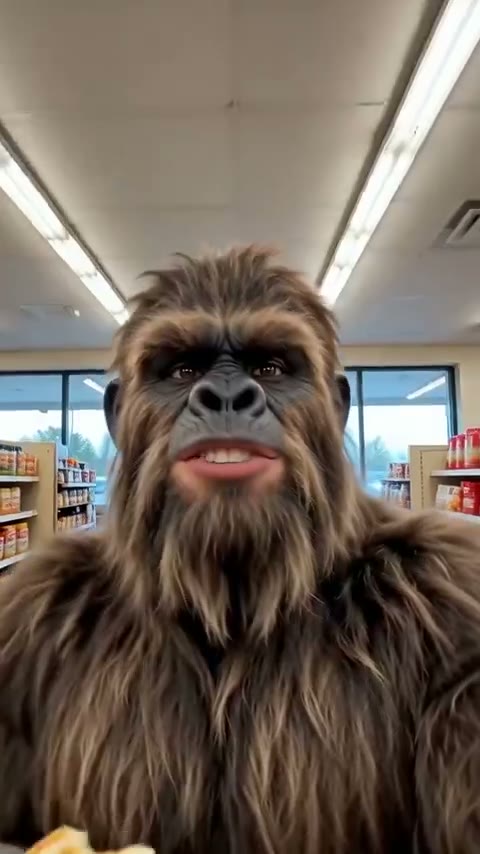
🦶 Cryptid Vlog
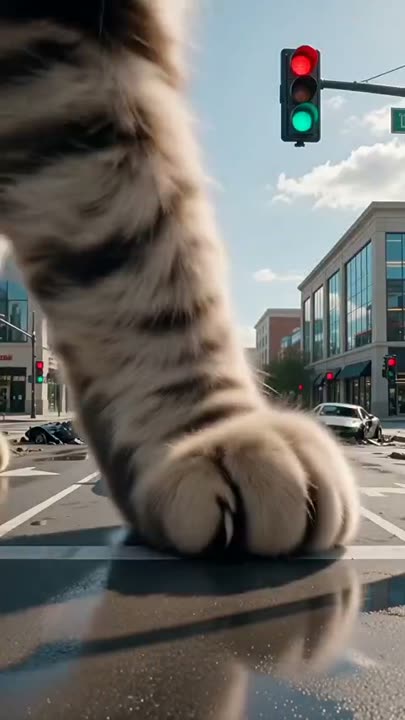
🏙️ Giant Encounter
Now automate it — see a real sample of what it posts, free
Watch a real sample video free. No credit card required.
Watch it free