Content Strategy
How Long Should Short-Form Videos Be in 2026?
There is no single correct length for a Short, a Reel, or a TikTok — there is a length that fits the story you're telling. Here's how to pick one, why the 60-second mark matters, and how to stop your narration running past the picture.
There is no universally correct short-form video length. Pick the shortest duration that still delivers a real payoff, then hold it consistently. Kineclip's series pipeline targets 60-78 seconds at 1080x1920, with the script budgeted to the voice's measured speaking rate so narration never overruns the picture.
“How long should my videos be?” is one of the first questions every short-form creator asks, and it is almost always answered badly — usually with a confident number pulled from someone else’s channel. The honest answer is that length is not an input you optimise on its own. It is an output of the story you are telling and the format you are telling it in.
That does not mean the question is useless. There are real constraints, real trade-offs, and one very common failure mode that ruins otherwise good videos. This guide covers what actually changes as a video gets longer, why the 60-second mark still matters, how to work out the right length for your niche, and the one technical detail — speaking rate — that quietly wrecks more videos than any pacing decision.
Why there is no single right answer
Every short-form platform ranks on watch behaviour rather than raw duration. Broadly, the platform wants to know: did people stay, did they finish, did they come back, and did they do something after watching. A 15-second video and a 75-second video can both satisfy that, and both can fail it.
What changes with length is the difficulty. Short videos make completion easy but leave you very little room to build anything — there is no second act in twelve seconds. Longer videos give you room for setup, escalation, and a payoff, but every extra second is another place someone can leave. The trade is not “short is better” or “long is better,” it is how much story do you have, and can you sustain attention for exactly that long. If you want the mechanics of how the ranking side of this works, the YouTube Shorts algorithm guide and the TikTok algorithm breakdown both go deeper than a length rule ever could.
The 60-second line, and why it still matters
Sixty seconds is not magic, but it is a real boundary in a few places. It is long enough for a three-act structure — hook, escalation, payoff — which is the minimum shape most narrated formats need. It is short enough that a viewer does not consciously decide to commit. And it sits comfortably inside the vertical short-form container on every major platform, which matters if you publish the same file in more than one place.
Below about thirty seconds you are effectively writing a single joke or a single fact. That works beautifully for some formats — a This-or-That or a punchy one-fact reveal — and works terribly for others. A Story Time needs room to establish a character before anything can go wrong to them. A Top-5 Countdown has five beats plus a build to number one, so squeezing it under thirty seconds means each entry gets about four words.
Match the length to the format, not the trend
The most reliable way to pick a length is to start from the format and work backwards. Kineclip exposes eight of them — Storytelling, What-If, Top-5 Countdown, Ranking, VS-comparison, POV, This-or-That, and Streak — and they do not all want the same runtime:
- List formats (Countdown, Ranking) scale with the number of entries. Five items need roughly a minute; three items can be done in half that.
- Narrative formats (Story Time, What-If) need setup before payoff. Under forty-five seconds they tend to feel rushed and the twist lands before the viewer cares.
- Immersive formats (POV) live or die on the opening line and can work at almost any length, because the tension is established in the first sentence rather than built over time.
The format guide for TikTok covers which of these tends to travel furthest on which platform.
The mistake that actually breaks videos: speaking rate
Here is the failure mode nobody warns you about. Most people write a script to a word count — “about 150 words for a minute” — and then wonder why the narration is still going when the last image is already on screen.
The problem is that speaking rate is not a constant. Different voices, and different deliveries of the same voice, cover meaningfully different amounts of text per second. If you budget words against an average rate, every voice slower than that average overruns the picture. The end of the script — which is where the payoff lives — is exactly what gets cut. We wrote a whole piece on the arithmetic in how many words a 60-second script actually holds.
The fix is simple to state and easy to get wrong: budget against the slowest voice you might use, not the average. Kineclip does this at the script step, before anything is rendered, which is why its videos land in a predictable band instead of a wide scatter.
What Kineclip targets, and why
A Kineclip series video targets 60 to 78 seconds, rendered vertical at 1080x1920. That band was chosen because it is long enough to carry a real three-act script in any of the supported formats, and short enough that a viewer does not have to decide to commit before pressing play.
Inside that runtime, scenes advance roughly every four seconds, so a full-length video moves through around fifteen distinct images rather than parking on three or four. That pacing matters more than the total length does: a 70-second video with fifteen visual changes feels considerably shorter than a 40-second video that holds one image for ten seconds at a time. If you want to see the whole pipeline end to end, how AI video generators work walks through each step, and the sample gallery shows finished output at that length.
How to test length on your own channel
Do not test length in isolation, and do not change it every week. Pick one duration, publish at least ten videos at it, and read retention rather than views. Specifically, look at where the drop-off cliff is. If most viewers leave in the first three seconds, your problem is the hook, not the length. If they leave two-thirds of the way through, the middle is sagging and the video is genuinely too long for the story. If they finish but never rewatch, the payoff is not landing.
Which analytics actually matter goes through this in more detail, including the metrics that are safe to ignore.
One length across platforms is usually correct
Producing separate cuts for TikTok, Shorts, and Reels sounds diligent and is usually a waste. The same vertical file is publishable on all of them, and the differences between the platforms are far more about audience and posting cadence than duration. Start with one length everywhere, and only diverge when you have real evidence from your own analytics that one platform wants something different. Repurposing one video across all three covers how to do that without tripping duplicate-content problems, and Shorts vs TikTok helps if you are still choosing where to start.
Getting started
If you would rather see a finished video at this length than read another rule of thumb, the get-started flow generates a free sample in your chosen niche with no card required. From there, the features page covers what a series actually automates, and pricing starts with a $4.99, 7-day trial before the $19-a-month Starter plan.
Frequently asked questions
Is a shorter video always better on TikTok and Shorts?
No. Shorter videos make it easier to hold a high completion rate, but completion is only worth something if the video was worth completing. A 12-second clip that nobody rewatches and nobody comments on is a weaker signal than a 70-second story that half the audience finishes and a chunk of them replay. The useful goal is not brevity, it is the shortest length that still lands the payoff.
What length does Kineclip generate?
Kineclip's series pipeline targets a 60 to 78 second vertical video at 1080x1920. The script is written to a word budget derived from the measured speaking rate of the voice you picked, so the narration actually fits the picture instead of being cut off. Scenes advance roughly every four seconds, so a full-length video moves through a new image around fifteen times.
Why do my videos get cut off at the end?
Almost always because the script was written to a word count rather than to a spoken duration. Speaking rate varies meaningfully between voices, so a script that fits comfortably at one delivery speed overruns at another. The fix is to budget words against the slowest voice you might use, not the average one — that is exactly what Kineclip's script step does before anything is rendered.
Should I use the same length on every platform?
Broadly yes, for one practical reason: producing three different cuts of the same story triples your work and usually improves nothing. A single vertical video in the 60 to 78 second range is publishable as a YouTube Short, a TikTok, an Instagram Reel, and a Facebook Reel. If one platform clearly rewards a different shape for your niche, change it there and leave the rest alone.
Does video length affect how much a video costs to make?
For a Kineclip series, no — a series video is covered by your plan regardless of where it lands in the target band. Starter is $19 a month for 12 videos, Growth is $39 for 30, and Pro is $69 for 60. Standalone AI videos on the AI-videos page are priced by duration in credits: 2 credits for a 5-second standard clip and 4 for a 10-second one, with premium at exactly double.
See what a series looks like
How Kineclip helps
Kineclip is built for the workflow above — multi-series planning, weekly batch generation, automatic publishing to YouTube Shorts, and a one-tap TikTok draft, without spending evenings editing.
Try Kineclip's series workflow →Related articles
Content Strategy
Which Analytics Actually Matter for a Faceless Channel? (2026)
Views are the least useful number on your dashboard. Here are the metrics that tell you what to change next, the ones safe to ignore, and how many videos you need before any of it means anything.
Content Strategy
What to Do When Your Faceless Channel Runs Out of Ideas (2026)
Running out of ideas is almost never a shortage of topics — it's a shortage of angles. Here are seven ways to reopen a niche you thought you'd exhausted, without switching to a new one.
Content Strategy
The Best AI Video Formats for TikTok in 2026
Countdown, What-If, Story Time, POV, This-or-That, Streak, Ranking, VS — when to use each AI video format on TikTok, and why rotating formats wins.
Make videos like these with AI
40+ viral templates — ASMR, talking characters, POV and more. Pick one and see a real sample in seconds.

✨ Impossible ASMR

🔮 Glass Fruit Cutting
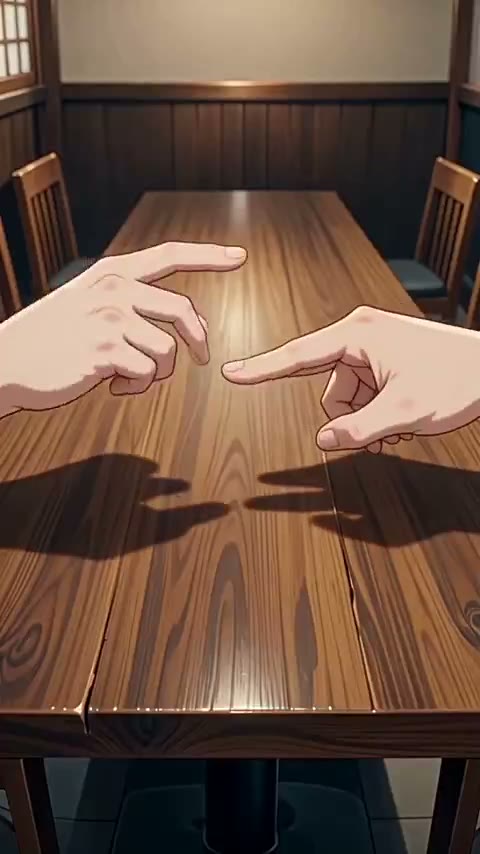
🍜 Food Summon Jutsu

🐶 Talking Animals
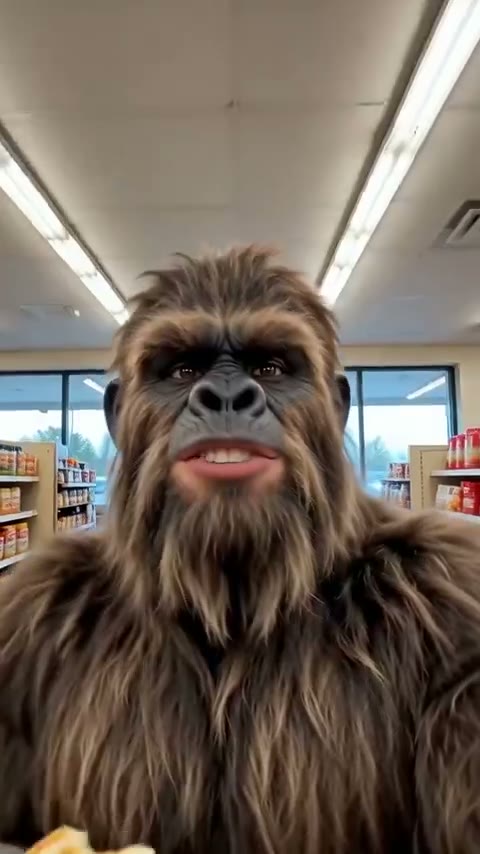
🦶 Cryptid Vlog

🏙️ Giant Encounter
Turn this into a daily-posting engine — see a free sample
Watch a real sample video free. No credit card required.
Watch it free