Platform Tips
YouTube Shorts Algorithm 2026: How It Works and How to Win It
Complete breakdown of how the YouTube Shorts algorithm ranks videos in 2026. Ranking signals, the 6-hour distribution test, swipe-away threshold, and how AI-generated Shorts win.
YouTube Shorts ranks videos on 5 signals led by the 2-second swipe-away rate (under 30% expands reach, over 50% kills it), with distribution tests resolving within 24–48 hours; best length is 25–50 seconds.
The YouTube Shorts algorithm is the most misunderstood ranking system in short-form video. Most creators apply TikTok logic to it and wonder why their videos plateau. Shorts is not TikTok. The signals are different, the feedback loop is faster, and the ceiling for AI-generated content is higher than on any other platform.
This breakdown explains exactly how YouTube Shorts ranks videos in 2026, what changed from prior versions, and how AI creators specifically can win distribution. Every claim in this post matches what Google has confirmed publicly through Creator Insider, John Mueller statements, and the YouTube Help documentation as of May 2026.
The 5 Signals That Rank YouTube Shorts in 2026
YouTube has confirmed that the Shorts ranking model in 2026 weights five signals, in roughly this order of importance.
1. Swipe-Away Rate in the First 2 Seconds
This is the single most important signal. When YouTube tests a new Short, it shows it to a small initial audience and measures what percentage swipe past it within the first 2 seconds. A low swipe-away rate (under 30%) signals that your hook works, and YouTube expands distribution. A high swipe-away rate (over 50%) effectively kills the video.
This is why hook quality matters more than total runtime quality on Shorts. A Short with a brilliant hook and mediocre middle outperforms a Short with a weak hook and a brilliant middle, because the second Short never gets the audience to find the middle.
2. Average Percentage Watched
Once a viewer stays past the 2-second swipe threshold, YouTube tracks what percentage of the Short they watch. The target is over 70% average watched for strong performers, over 85% for breakout videos. This is why script pacing matters so much — every 5 seconds without forward narrative momentum loses viewers and drops your average.
3. Re-Watch Rate
YouTube introduced re-watch tracking as a stronger ranking signal in late 2025. When viewers loop a Short multiple times before swiping away, it signals high content density. This benefits Shorts with surprising endings, quick visual jokes, complex information that needs a second viewing, and shocking reveals.
4. Share and Save Rate
Shares to external platforms (WhatsApp, iMessage, Instagram DM) and saves to a viewer's "Watch Later" list both signal high value. YouTube weights external shares roughly 5x more than in-app shares because external shares are a stronger commitment from the viewer.
5. Click-Through to Long-Form Content
New in 2026: YouTube now tracks whether Shorts viewers click through to your long-form videos or channel page. A Short that drives long-form engagement gets a small ranking boost because it indicates the audience wants more from you. This is one reason creators who post both Shorts and long-form grow faster than creators who post only one format.
The 6-Hour Distribution Test
Every new Short goes through a structured distribution test that operates roughly on this timeline.
Minute 0 to 15: YouTube shows your Short to 100 to 500 viewers, mostly from your existing subscribers and viewers who have engaged with similar content. Initial signals are measured here.
Minute 15 to 60: If initial signals are positive, YouTube expands distribution to 1,000 to 10,000 viewers across a broader topic match. This is where most Shorts either accelerate or stall.
Hour 1 to 6: Strong performers continue to expand by order-of-magnitude jumps every few hours. A Short that hits 100,000 views in 6 hours typically continues to grow for 24 to 48 hours before plateauing.
Day 1 to 7: The vast majority of a Short's lifetime views come within the first 7 days. Unlike TikTok, Shorts resurges weeks later are rare — when a Short plateaus, it usually stays plateaued.
What Changed from 2024 to 2026
The #Shorts Tag Is No Longer Required
YouTube confirmed in late 2025 that vertical aspect ratio and length under 60 seconds are sufficient signals to classify a video as a Short. Adding #Shorts to the title or description does not boost rankings.
Length Cap Raised to 3 Minutes
Shorts can now be up to 3 minutes long, up from 60 seconds. But the algorithm still strongly prefers 25 to 50 seconds for most niches. Longer-form Shorts work in educational and storytelling niches but should be tested carefully.
Music Library Restrictions Loosened
The YouTube Shorts music library now includes more commercial tracks, though copyright restrictions still affect monetization in some territories. AI-generated music and royalty-free tracks have no restrictions, which is one reason AI tools like Kineclip ship with built-in music libraries.
Cross-Promotion to Long-Form
New in 2026: YouTube now actively promotes long-form videos to Shorts viewers who watch your channel content multiple times. This creates a compounding effect for creators who post both formats.
How AI-Generated Shorts Compete in 2026
YouTube has publicly stated that AI-generated content is fully eligible for Shorts distribution and monetization as long as it meets the authenticity guidelines: original voiceover, transformative narrative, and meaningful production value. AI-generated narration paired with AI-generated visuals on an original script all qualify.
What does not qualify: pure reuploads, mass-translated foreign content with no transformative elements, or AI-generated text-only Shorts with no meaningful narrative. The distinction is whether the Short feels like original creative work or like spammed templated content.
Why AI Shorts Outperform Manual Shorts for Many Creators
AI tools eliminate the production bottleneck. A creator manually producing Shorts hits a ceiling at 1 to 2 videos per day before burnout. With Kineclip, the same creator can produce 5 to 10 Shorts per day with consistent quality. More videos means more shots at a viral hit, more topic experiments, and faster iteration based on analytics data.
Quality consistency is the second AI advantage. Manual creators have off days — tired voices, rushed edits, inconsistent visuals. AI pipelines deliver the same quality on video 500 as on video 1. This consistency compounds audience trust and keeps completion rates high.
Hook Patterns That Beat the 2-Second Swipe Test
Given how critical the swipe-away rate is, here are the hook patterns that test highest in 2026.
The Pattern Interrupt Hook
Open with a visual or statement that breaks expected patterns. "Most people think gravity pulls — it actually pushes." The viewer's brain snags on the unexpected claim and they stay to resolve it.
The Outcome Tease Hook
Show the end state first, then reverse into how it happened. "This building was bombed in 1944 and rebuilt twice. The story is darker than you think." This works particularly well for history and true crime content.
The Direct Question Hook
Open with a specific question the target audience cannot resist. "Why does the IRS audit accounts under $30,000 more than accounts over $1 million?" Direct questions create a curiosity gap that holds the viewer.
The Stat-Bomb Hook
Open with a counterintuitive statistic. "78% of TikTok creators making over $100K per year have never shown their face." The specificity makes the claim feel credible, and the counterintuitive number creates engagement.
The Confession Hook
Open with a vulnerable admission that hooks emotional engagement. "I lost $40,000 in three months because of one credit score mistake." Works best for finance, fitness, and self-improvement niches.
Posting Strategy for YouTube Shorts in 2026
Cadence
One to two Shorts per day is the sweet spot for most niches. Unlike TikTok, posting 3+ times per day can hurt YouTube Shorts performance because it splits your channel's distribution test pool across too many videos at once. If you have high-volume capacity, batch produce and schedule across weeks rather than posting all at once.
Timing
Post when your specific audience is most active. YouTube Analytics shows you exactly when this is. For English-speaking general audiences, 11 AM and 7 PM Eastern tend to perform best. But your specific audience may differ — always optimize based on your own data after 30 days of posting.
Title and Description
Titles for Shorts should be under 60 characters, contain a curiosity hook or a number, and avoid keyword stuffing. Descriptions can be 100 to 150 characters with 2 to 4 relevant hashtags. The description still matters in 2026 for topic classification, even though it is not directly visible to most Shorts viewers.
Common YouTube Shorts Mistakes That Kill Distribution
- Reuploading TikTok videos with watermarks. YouTube actively detects and demotes Shorts with visible TikTok watermarks. Always export clean versions for YouTube.
- Copyrighted music. Even when usable in the YouTube library, copyrighted tracks block monetization in some territories. Use royalty-free or AI-generated music for maximum monetization.
- Weak first 2 seconds. If your Short opens with a static frame, a logo, or generic talking-head intro, you are bleeding viewers before the algorithm has data to work with.
- Inconsistent niche. Posting across unrelated topics confuses the algorithm's topic classification and reduces distribution. Pick a lane and stay in it for at least 90 days before expanding.
- No CTA to long-form. Failing to direct Shorts viewers to your long-form content forfeits the cross-promotion ranking boost and the eventual Watch Hours that unlock long-form monetization.
Producing Algorithm-Optimized Shorts at Scale with AI
Shorts that win the algorithm in 2026 share four traits: strong hooks, tight pacing, native vertical 1080×1920 framing, and word-synced captions. Kineclip produces all four by default. Choose your niche, your content type, and your art style, and Kineclip generates a complete Short in 3–5 minutes — fully optimized for YouTube's ranking signals.
For high-volume creators, the series feature lets you batch generate a full month of Shorts in one session, then schedule them to publish on a cadence that matches the algorithm's preferences. Connect your YouTube channel and switch auto-publish on, and the upload queue handles publishing automatically from then on.
Frequently Asked Questions
How does the YouTube Shorts algorithm work in 2026?
The YouTube Shorts algorithm in 2026 ranks videos by swipe-away rate, average percentage watched, re-watch rate, share rate, and click-through to long-form content. The first 2 seconds are the most critical signal.
How long does YouTube Shorts take to push a video?
YouTube Shorts typically completes its initial distribution test within 6 hours and the major scaling decisions within 24 to 48 hours. Unlike TikTok, late resurges are rare.
Do hashtags help YouTube Shorts in 2026?
Hashtags help YouTube classify your Short for topical surfaces but do not directly drive views. Two to four relevant hashtags are sufficient. The #Shorts tag is no longer required.
What length should YouTube Shorts be in 2026?
YouTube Shorts perform best between 25 and 50 seconds. The format now supports up to 3 minutes, but completion rate drops sharply past 60 seconds for most niches. Educational niches can sustain 70 to 90 seconds.
Does YouTube Shorts cannibalize long-form views?
No. YouTube confirmed in 2026 that Shorts and long-form are ranked by separate algorithms. Creators who post both formats grow faster than creators who post only one.
Can AI-generated Shorts get monetized?
Yes. YouTube Partner Program eligibility requires 1,000 subscribers and 10 million Shorts views in 90 days (or 4,000 long-form watch hours). AI-generated content qualifies if it meets authentic-content guidelines. See our full YouTube Shorts monetization guide for the math.
Start Posting Algorithm-Optimized Shorts Today
YouTube Shorts is the highest-ceiling short-form platform in 2026 for creators who understand its ranking model. The audience is larger, the monetization ceiling is higher, and the algorithm is more predictable than TikTok's. The only obstacle is consistent production — which AI video tools solve completely.
Start with Kineclip and produce your first YouTube Short in 3–5 minutes. Test your niche, optimize your hook, and let the algorithm push your content to a new audience.
See what a series looks like
How Kineclip helps
Kineclip handles the tactics in this article automatically — vertical format, optimal length, captions, scheduling, and consistent daily posting.
Try Kineclip's series workflow →Related articles
Platform Tips
Why Your YouTube Shorts Get No Views (And How to Fix It)
Shorts with zero views usually fail in the first two seconds, not the algorithm. Here is how to diagnose the real cause and fix it.
Platform Tips
How Often Should You Post YouTube Shorts?
Posting frequency matters less than most creators think, and in a specific way. What the cadence actually changes, and how to pick one you can hold.
Platform Tips
Do Hashtags Still Matter for Short-Form Video?
What hashtags actually do on Shorts, Reels and TikTok in 2026, how many to use, and why they are the last thing to optimize.
Make videos like these with AI
40+ viral templates — ASMR, talking characters, POV and more. Pick one and see a real sample in seconds.

✨ Impossible ASMR
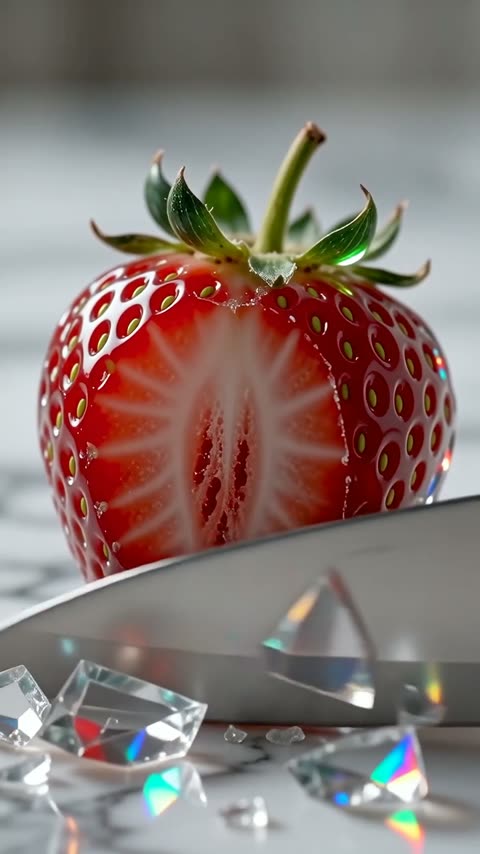
🔮 Glass Fruit Cutting

🍜 Food Summon Jutsu

🐶 Talking Animals
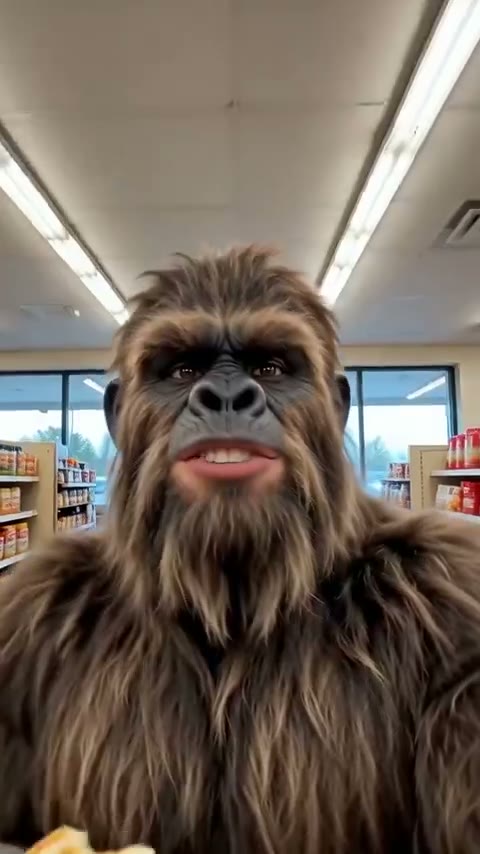
🦶 Cryptid Vlog

🏙️ Giant Encounter
Now automate it — see a real sample of what it posts, free
Watch a real sample video free. No credit card required.
Watch it free