Content Strategy
Titles and Descriptions for Faceless Shorts
How to write honest, specific titles and short descriptions for faceless Shorts, with twelve before-and-after examples and a checklist of what to avoid.
A good Short title names the subject, hints at the payoff and promises only what the video delivers. A description adds one plain sentence and, where relevant, a single link. Neither is a place to stuff keywords.
On a faceless channel the title and description carry more weight than they do on a personality channel, because there is no face or recognisable name to hold attention. The title is often the only text a viewer reads before deciding whether to watch.
The aim is to be specific, honest and quick. Specific, so a viewer knows what the video is about. Honest, so the video delivers on it. Quick, because the feed shows only the first few words.
A formula to start from
Subject + a detail that raises a question.
- “Why the Moon appears larger near the horizon” (subject plus a question)
- “The only country that is also a continent” (subject plus a surprising claim; verify before using)
- “Pick one: sleep or coffee” (a format-based title for a this-or-that video)
Put the subject first, because the title is truncated in many feeds. Leave out filler such as “You won’t believe…” and “This is crazy”: they take up scarce space and say nothing.
Twelve rewrites
All examples are illustrative: they show a technique, they are not tested titles and they are not claims about real performance.
| Weak | Stronger | What changed |
|---|---|---|
| Amazing space fact! | Why a day on Venus is longer than its year | Names the subject and poses a question |
| You won’t believe this | The bridge that fell because of one missing bolt | Replaces a vague claim with a concrete image |
| History is crazy | The night every streetlight in the city went out at once | Specific, narrative, not a generic reaction |
| Top 5 facts | Five things about Mars that sound fake | Adds a reason to open the list |
| This or that? | Pick one: save £10 a week or earn £10 more a week | The choice is visible in the title |
| Money tips | Why a budget fails in month three | States the problem the video explains |
| Psychology fact | Why you remember embarrassing moments better | Matches a real viewer experience |
| POV | POV: the stairs creak and you live alone | Keeps the format signal and adds the stake |
| Ranking | Ranking five medieval jobs from bearable to terrible | Tells you what is being ranked and the scale |
| What if? | What if the Moon disappeared for a day? | Concrete premise instead of the format name |
| Must watch | The three-second mistake in most cooking videos | Specific problem and number |
| Secret nobody tells you | The label on every can that almost nobody reads | Substitutes a verifiable observation for a hollow promise |
The clickbait test
Before publishing, answer three questions:
- Does the video answer the question the title raises, in plain words?
- Would a viewer who finished the video feel the title was fair?
- Is every factual claim in the title also one you have checked? A title is a claim that appears without the context of the video.
If the answer to any is no, change the title. A title that overpromises can win a view and lose the viewer, and platforms also have policies on misleading metadata; read them on the platform’s own pages.
Descriptions
For a Short, the description is short and optional in effect. A simple template:
Line 1: One plain sentence saying what the video explains.
Line 2: (Optional) A related question or the next video in the series.
Line 3: (Optional) A single link, if it is relevant.
Hashtags: A few relevant ones, not a crowd.
Do not paste a block of unrelated keywords; it does not help viewers and reads as spam. For hashtag guidance, read hashtags for faceless Shorts.
Format-specific notes
- Countdowns and rankings: include the number and the scale. See the ranking videos guide.
- This-or-that videos: make the choice visible in the title. See the this-or-that guide.
- POV videos: use “POV:” plus a scene. See the POV guide.
Where this fits
Titles and descriptions are part of the final review. The YouTube Shorts upload checklist shows where they come in, and the pre-publish checklist covers the whole video.
Frequently asked questions
How long should a Shorts title be?
YouTube allows up to 100 characters, but the feed shows far fewer on a phone, so put the subject and the hook in the first few words. Treat the limit as a ceiling, not a target, and check the platform for its current rules.
Do I need hashtags in the title?
Not necessarily. Hashtags are optional and work best as a short, relevant set rather than a crowd. The hashtag guide covers the practical limits and what to avoid.
Does the title matter for Instagram Reels and TikTok?
On those platforms the caption is the closest equivalent. The same principles apply: lead with the subject, promise only what the video shows, keep it short, and avoid misleading phrasing.
Does Kineclip write titles for me?
Kineclip generates a title for each video along with the script, so the practical job is to read it before it goes out and edit it if it overpromises. Titles you write yourself can follow the formula in this article.
See what a series looks like
How Kineclip helps
Kineclip is built for the workflow above — multi-series planning, weekly batch generation, automatic publishing to YouTube Shorts, and a one-tap TikTok draft, without spending evenings editing.
Try Kineclip's series workflow →Related articles
Content Strategy
Fact-Check Checklist for AI Video Scripts
A five-minute fact-check routine for AI-written short-video scripts: which claims to verify first, what counts as a source, and safer wording when you cannot.
Content Strategy
Finance, Health and News Shorts: Extra Care Guide
How to make faceless shorts about money, health and breaking news responsibly: what to avoid, how to word claims, and when a topic is not worth the risk.
Content Strategy
How to Test Hooks Without Fooling Yourself
How to compare short-video hooks with small numbers: what you can control, what Kineclip cannot hold constant, and a decision rule that respects noise.
Make videos like these with AI
40+ viral templates — ASMR, talking characters, POV and more. Pick one and see a real sample in seconds.

✨ Impossible ASMR
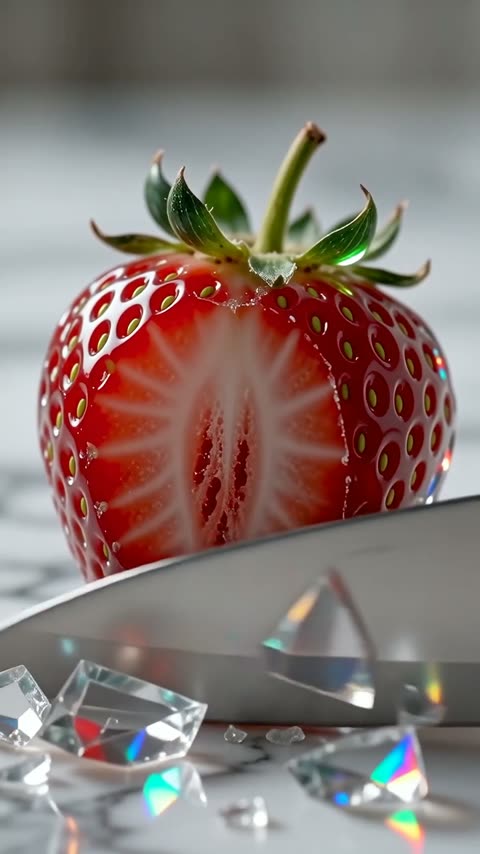
🔮 Glass Fruit Cutting

🍜 Food Summon Jutsu

🐶 Talking Animals
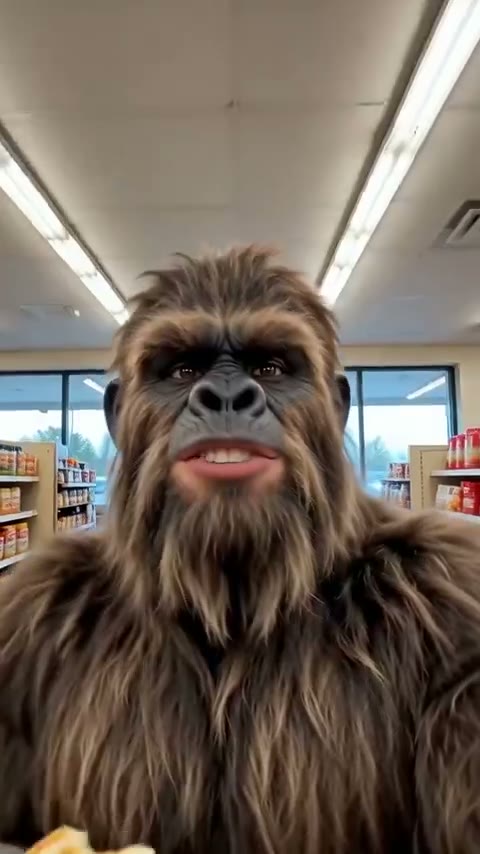
🦶 Cryptid Vlog

🏙️ Giant Encounter
Turn this into a daily-posting engine — see a free sample
Watch a real sample video free. No credit card required.
Watch it free