Guides
One Article, Five Short-Video Angles
How to get five distinct short videos from one article or set of notes by changing the angle, not the facts, with a worked example and a repetition test.
Each video should answer a different question about the same source: the surprise, the how, the mistake, the comparison and the story. Change the question, not just the wording, and review each output for repetition.
A well-researched article holds more than one video. The mistake is to cut one summary into five slightly different summaries. The better approach is to ask five different questions of the same material, so each video has its own hook and payoff.
The five angles
| Angle | The question it answers | Typical opening |
|---|---|---|
| The surprise | What is the least expected fact here? | A claim that contradicts a common belief |
| The how | What are the steps? | A promise of a result in a few steps |
| The mistake | What goes wrong, and why? | A common error |
| The comparison | How does A differ from B? | A choice or a contrast |
| The story | Who did this, and what happened? | A person or a moment |
A worked example (invented)
Suppose a gardening blog post called “Why Tomato Seedlings Get Leggy” has sections on light, temperature, spacing, watering and a grower’s anecdote. The five videos might be:
- Surprise: “Your tomato seedlings are not reaching for water, they are reaching for light.”
- How: “Three changes that straighten leggy seedlings.”
- Mistake: “The windowsill mistake that stretches every seedling.”
- Comparison: “Window light versus a grow light: what changes.”
- Story: “The grower who lost a tray in a week, and what she changed.”
The article, post and grower are invented for illustration. Every claim in a real version should come from the source and be checked.
The repetition test
Before generating, write the first line and the last line of each planned video. If two share both, merge them. If two share the same fact in the middle, that is fine; a fact can serve more than one question.
The workflow in Kineclip
- Create a series whose look and voice you want for these videos. Create from source uses the existing series’ look and voice.
- Open Create from source. Paste your text, or enter the URL of an article you own or have permission to use.
- Generate one video. Credits are used for each.
- Review it against the fact-check checklist, because the generator writes its own wording and may add or drop details.
- Repeat with a different focus for the next angle. Because the tool takes the whole text, prune the source down to the section that serves the angle before pasting.
The pruning step is the editorial work that makes the angles distinct. For the broader topic of turning written material into video, see how to turn articles into short videos and how to repurpose blog posts into videos.
Limits to remember
- It does not clip long video or audio.
- The wording is the tool’s, so the exact phrasing of your article will not appear.
- Pasted text and URLs work for material you may lawfully use. Do not paste confidential or personal data.
Where to go next
Use the storyboard template to plan each video’s beats, and the titles guide to name them without overpromising.
Frequently asked questions
Does Kineclip use my article word for word?
No. Create from source builds a video from your text or an article URL, and it writes its own wording. Treat your material as input, not as a script to be reproduced.
Can I use someone else's article?
Only with permission, or where the licence allows it. Use your own writing or material you have the right to adapt, and link to or credit the source where appropriate.
How many videos from one article is too many?
As many as you can make distinct. If a viewer who saw two would feel they saw the same thing twice, you have too many.
Does this replace a normal series?
It complements it. Create from source is good for specific material you own, while a regular series keeps a channel running on a schedule.
See what a series looks like
How Kineclip helps
Kineclip is the practical implementation of the workflow described above — pick a niche, set a schedule, and the system produces vertical videos end-to-end.
Try Kineclip's series workflow →Related articles
Guides
Storyboard Template for Faceless Short Videos
A copy-and-paste storyboard table for 60-second faceless videos: narration, visual and change per scene, with a worked example and the mistakes it catches.
Guides
Hook Rewrite Clinic: 12 Weak Openers, Fixed
Twelve weak short-video openers rewritten one at a time, with the reason each fix works and a four-question test you can run on your own first line.
Guides
How to End a Short Video: Payoffs, Loops and CTAs
Three jobs an ending can do for a faceless short, with before-and-after examples, a loop-ending technique and the one call to action worth keeping.
Make videos like these with AI
40+ viral templates — ASMR, talking characters, POV and more. Pick one and see a real sample in seconds.

✨ Impossible ASMR
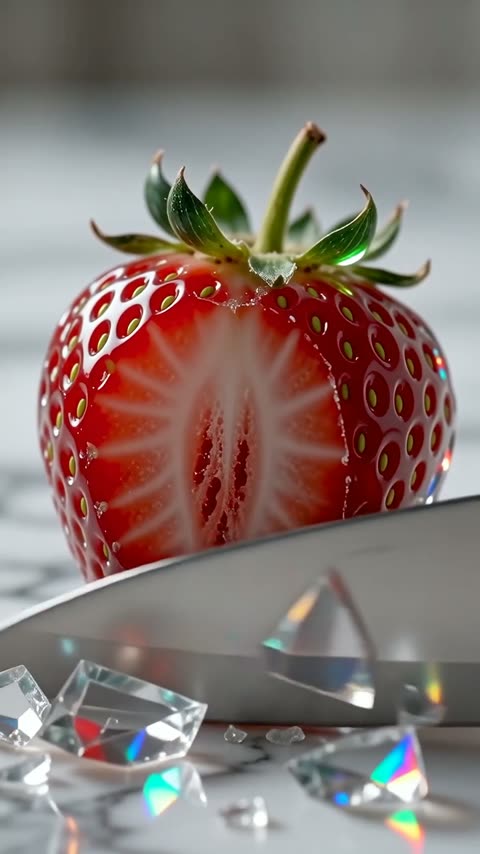
🔮 Glass Fruit Cutting

🍜 Food Summon Jutsu

🐶 Talking Animals

🦶 Cryptid Vlog

🏙️ Giant Encounter
Do it the easy way — see what the workflow makes, free
Watch a real sample video free. No credit card required.
Watch it free