Content Strategy
How to Write Viral Short-Form Video Scripts (2026)
The craft behind scripts that retain: the first-line hook, front-loaded value, tight pacing, open loops, and a repeatable hook-context-payoff-loop structure for TikTok, Reels, and Shorts.
A short-form script lives or dies on its first line. The reliable structure is hook, context, payoff, loop: open a loop in the first second, give just enough context to make the payoff land, deliver it without dead air, then close by looping back so the video feels complete. Keep it to 80 to 150 spoken words for a 30 to 60 second clip, and vary the angle to keep a series fresh.
The visuals get the attention, but the script is where a short-form video is won or lost. A stunning AI-generated image attached to a weak first line still gets swiped past in under a second. A plain image attached to a script that grabs and holds will outperform it every time. If you are making faceless short-form video — for TikTok, Instagram Reels, or YouTube Shorts — learning to write a tight script is the single highest-impact skill you can build.
This guide is the craft, not the theory. We will go line by line through the first-second hook, front-loading value, keeping the pace ruthless, the word count that actually fits 30 to 60 seconds, the retention tricks that reset a viewer's attention, and a close that loops the video back on itself. By the end you will have a repeatable structure you can run every day without it going stale.
The first line is the whole game: hooks
Short-form feeds are a swipe machine. A viewer decides whether to stay within the first second or two, before your point has even landed. That means your opening line is not an introduction — it is a filter. Its only job is to make scrolling past feel like a mistake.
The mechanism behind every strong hook is the open loop: you promise something the viewer can only get by staying. A few hook types that reliably open that loop:
- The bold claim — state something surprising or counterintuitive ("Most people are saving money the wrong way").
- The sharp question — pose a question the viewer wants the answer to ("Why do the same three niches keep going viral?").
- The stakes hook — set up tension or a consequence ("This one mistake quietly kills most faceless channels").
- The curiosity gap — name a thing without explaining it yet ("There is a reason this video keeps you watching").
- The direct callout — speak to a specific person ("If you post short-form and get no views, this is for you").
Whatever type you pick, kill the warm-up. No "hey guys," no throat-clearing, no slow build. The hook is the first word out of the narrator's mouth, and the on-screen caption should land it at the same instant.
Front-load the value
Old long-form instincts — context first, payoff later — are poison in short form. Viewers will not wait for a payoff they cannot see coming. The fix is to deliver value early and continuously: the hook makes a promise in second one, and the very next lines start paying it back.
A useful test: if a viewer dropped off at the halfway mark, did they still get something? If the answer is no — if all the value is stacked at the end — you have built a video that only rewards the few who survive to the finish. Spread the payoff across the runtime so every second earns the next one.
Tight pacing: no dead air
Pacing is the difference between a script that feels alive and one that drags. In short form, dead air — any moment where nothing new is being said or shown — is where viewers leave. Every line should either advance the idea or raise a new question. The instant a sentence is just filler, cut it.
Practically, that means short sentences, active voice, and one idea per line. Read the draft aloud; anywhere you stumble or get bored, the viewer will too. Tight pacing also drives the visuals — when each line is a distinct beat, the scene plan can change the picture every few seconds, which is itself a retention tool. This is why the way a script is written shapes everything downstream, as the breakdown of how AI video generators work explains in detail.
The word-count sweet spot
Length is not a style choice — it is a constraint set by the clock. For a 30 to 60 second clip, the sweet spot is roughly 80 to 150 spoken words. Below that you are leaving runtime empty; above it the narration starts to rush, captions fly by too fast to read, and pacing collapses.
Count spoken words, not written ones, and always read at a natural delivery speed. A good discipline is to write long, then cut hard: a first draft at 200 words trimmed to 130 is almost always sharper than a script that was 130 from the start, because the cutting forces every remaining line to justify itself.
Retention techniques: open loops and pattern interrupts
Beyond the opening hook, the body needs its own engine to keep attention from leaking out. Two techniques do most of the work:
- Stacked open loops — do not resolve every question at once. As you close one loop, open the next ("...and that is only half of it"). The viewer always has an unresolved reason to stay.
- Pattern interrupts — change something to reset the viewer's attention before it fades: a new visual, a shift in tone, a one-word line, a hard cut. The brain re-engages with novelty, and a well-timed interrupt every few seconds resets the clock.
Both work because attention in a feed is fragile and constantly re-deciding. You are not asking for one big commitment up front — you are earning the next two seconds, over and over, until the video is done.
The close: loop it, then ask softly
How you end determines whether the video feels complete — and whether the algorithm reads it as satisfying. The strongest close is a loop: the final line points back to the hook, so the ending answers the question the opening raised. Done well, a loop also makes the video replayable, because the last line flows naturally back into the first.
Resist the hard sell. A blunt "follow me" on every video trains viewers to ignore it. A soft call to action works better: tease what the next video covers, or let the loop itself imply there is more where this came from. The follow becomes a natural consequence of a satisfying watch, not a demand. Captions matter at the close too — a clean, readable final line landing in sync with the narration is what an AI captions generator handles automatically.
A repeatable structure: hook, context, payoff, loop
Put it all together and you get a structure you can run every single day:
- Hook — open a loop in the first line. No warm-up.
- Context — the minimum setup needed to make the payoff land. Keep it short; context is a bridge, not a destination.
- Payoff — deliver on the hook's promise, spread across the body with no dead air and a pattern interrupt or two.
- Loop — close by pointing back to the hook, with a soft CTA if any.
The power of a fixed structure is consistency: you stop reinventing the format every day and pour your energy into the part that actually varies — the idea. It also pairs perfectly with batching content as a faceless creator, because a known structure makes a stack of scripts fast to produce in one sitting.
Keeping a series fresh without repeating yourself
The risk with any formula is that it starts to feel like a formula. The fix is to reuse the structure but rotate everything inside it. Keep the hook-context-payoff-loop skeleton, then vary the hook type from video to video — a bold claim one day, a sharp question the next — so openings never feel copy-pasted. Pull topics from a niche deep enough to sustain hundreds of angles; the difference between a channel that runs dry and one that does not is almost always the niche you chose, not the structure.
Vary the angle on a single topic too. One fact can be a myth-busting hook, a surprising-statistic hook, or a story hook depending on how you frame it — three distinct videos from one idea. That is how a daily series stays fresh without you inventing a new format every morning.
Where AI fits
Every rule in this guide is a rule a machine can follow. A good AI script generator does not replace the craft — it encodes it. The hook-first opening, the 80 to 150 word target, the tight pacing, the looping close, and the per-niche tone all live in the prompt that feeds the language model. That is why two tools running the same underlying model can produce wildly different scripts: the one with the structural rules baked in writes short-form, the one without writes an essay.
Kineclip's AI video script generator applies exactly this structure on every video — hook, context, payoff, loop, tuned per niche — and then carries the script through voiceover, visuals, captions, and render automatically. If you would rather see the rules in action than apply them by hand, that is the place to start.
Frequently asked questions
How long should a short-form video script be?
For a 30 to 60 second clip, aim for roughly 80 to 150 spoken words. That is the sweet spot where the narration stays brisk without rushing, and it leaves room for a strong hook and a clean close. Count spoken words, not written ones — read your draft aloud at a natural pace and trim anything that does not earn its place.
What makes a good hook for a short-form video?
A good hook creates an open loop in the first line — it promises a payoff the viewer has to keep watching to get. The strongest hooks state a surprising claim, ask a sharp question, or set up a tension that demands resolution. Avoid slow warm-ups like greetings or throat-clearing; the first second decides whether anyone sees the second.
How do I keep viewers watching all the way through?
Front-load the value, keep the pace tight with no dead air, and use retention techniques like open loops and pattern interrupts to reset attention every few seconds. Every line should either advance the story or raise a new question. The moment a sentence stops doing work, viewers swipe away.
Should every short-form video have a call to action?
A soft call to action works better than a hard sell in short form. Instead of demanding a follow, loop the ending back to the hook or tease what is coming next — that earns the follow naturally. Save explicit asks for occasional videos rather than every one, because constant CTAs train viewers to tune them out.
How do I keep a daily series fresh without repeating myself?
Reuse the structure, not the content. A repeatable hook-context-payoff-loop framework lets you ship consistently, while rotating the angle, the hook type, and the specific payoff keeps each video distinct. Pulling topics from a deep niche and varying which hook style you open with prevents the formula from feeling formulaic.
Can AI write short-form scripts that follow these rules?
Yes — the rules in this guide are exactly what a well-built AI script generator encodes in its prompt: hook first, tight pacing, the 80 to 150 word target, and a looping close. The quality difference between tools comes down to how carefully those structural rules and per-niche tone are baked into the prompt, not the underlying model.
See what a series looks like
How Kineclip helps
Kineclip is built for the workflow above — multi-series planning, weekly batch generation, automatic publishing to YouTube Shorts, and a one-tap TikTok draft, without spending evenings editing.
Try Kineclip's series workflow →Related articles
Content Strategy
How Long Should Short-Form Videos Be in 2026?
There's no single correct length for a Short, a Reel, or a TikTok — there's a length that fits the story you're telling. Here's how to pick one, why the 60-second mark matters, and how to stop narration overrunning the picture.
Content Strategy
Which Analytics Actually Matter for a Faceless Channel? (2026)
Views are the least useful number on your dashboard. Here are the metrics that tell you what to change next, the ones safe to ignore, and how many videos you need before any of it means anything.
Content Strategy
What to Do When Your Faceless Channel Runs Out of Ideas (2026)
Running out of ideas is almost never a shortage of topics — it's a shortage of angles. Here are seven ways to reopen a niche you thought you'd exhausted, without switching to a new one.
Make videos like these with AI
40+ viral templates — ASMR, talking characters, POV and more. Pick one and see a real sample in seconds.

✨ Impossible ASMR

🔮 Glass Fruit Cutting

🍜 Food Summon Jutsu

🐶 Talking Animals
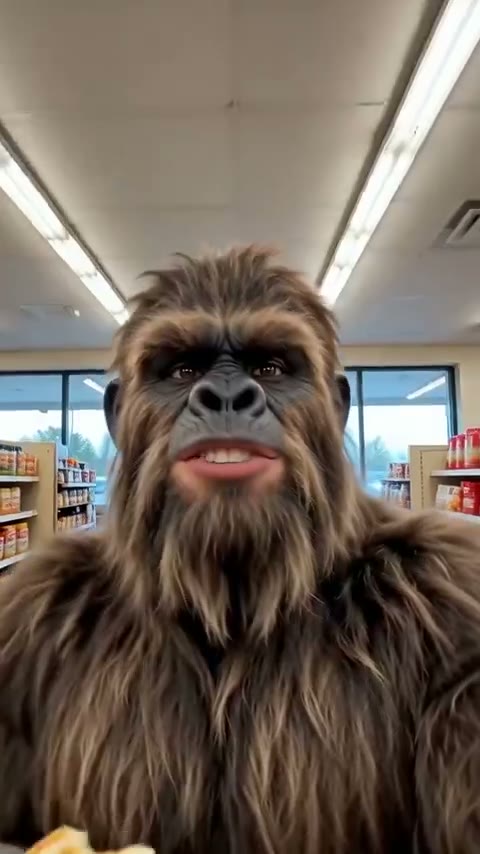
🦶 Cryptid Vlog

🏙️ Giant Encounter
Turn this into a daily-posting engine — see a free sample
Watch a real sample video free. No credit card required.
Watch it free