Content Strategy
How to Make AI Videos Look Real in 2026: 12 Quality Tactics
12 production tactics to make AI-generated videos indistinguishable from manually edited content. Covers voice, visuals, pacing, captions, audio mixing, and the editorial decisions that make AI feel real.
To make AI video look real, nail five layers: voice inflection, consistent visuals, varied pacing, word-synced captions, and audio mixing. In 2026, fewer than 15% of viewers can spot well-produced AI video in blind tests.
AI video tools are everywhere in 2026, but most AI-generated content is instantly recognizable as AI. Generic stock visuals, monotone voiceover, captions that appear all at once, and obvious template structure all signal "this was made by a machine" to viewers. The good news: every single one of these tells is fixable with the right production approach.
This guide breaks down the 12 specific tactics that separate AI video that performs from AI video that flops. Each tactic targets a specific "AI tell" and gives you the fix. Apply all 12 and your AI videos become indistinguishable from manually produced content in blind A/B tests.
The 5 Layers of AI Video Quality
Before tactics, understand the five layers that determine perceived quality: voice, visuals, pacing, captions, and audio mixing. Each layer contributes incrementally. Most "AI-looking" videos fail on three or more layers simultaneously. Strong AI videos get all five right. The tactics below address each layer in order of impact.
1. Use a Premium Voice Model With Inflection
Voice is the single strongest tell. A monotone, robotic voice immediately signals AI regardless of how good the visuals are. Use premium voice models (modern OpenAI voice, ElevenLabs, Play.ht, or bundled models in tools like Kineclip) and configure inflection settings to match content tone.
Specific settings that matter: speed variation between sentences, emphasis weighting on key words, and pause length between paragraphs. A voice that reads at constant speed with constant emphasis sounds AI. A voice that speeds up on lists and slows down on punchlines sounds human.
2. Write Scripts With Speech Rhythm, Not Reading Rhythm
Scripts written for the page sound wrong when read aloud. They are too formal, too information-dense, and lack the rhythmic structure of speech. AI voice exposes this immediately — the cadence sounds robotic because the script is robotic.
Fix: write in speech rhythm. Short sentences. Mix in fragments. Conversational asides. Direct address to the viewer. Read the script aloud before generating the voiceover — if you stumble or hear it sound unnatural in your own mouth, the AI voice will sound the same way.
3. Vary Scene Length to Match Narrative Beat
Default AI video generators produce scenes of identical length (3 to 5 seconds each), which creates a metronomic feel that signals AI. Real editing has scene-length variation: 1-second jolts on punchlines, 6 to 8-second holds on emotional moments, 2 to 3-second beats for transitions.
Strong AI tools let you control scene timing or generate variation automatically based on script structure. Kineclip adjusts scene timing per narrative beat by default, which removes the metronomic AI tell most generators have.
4. Use Consistent Art Style Across All Scenes
One of the strongest "AI tells" is style inconsistency between scenes — scene 1 looks photorealistic, scene 2 looks anime, scene 3 looks watercolor. Real video editing uses one consistent visual style for the full video.
Pick an art style that matches your niche (cinematic for finance, atmospheric for horror, vibrant for motivation) and use it for the entire video. Kineclip has 15 art styles that maintain consistency across all scenes in a single video.
5. Add Word-Level Animated Captions
Captions that appear all at once look like an AI default. Word-by-word synced captions look like professional editing. The difference is striking — word-synced captions also boost completion rate by 12% to 25% on every major platform.
Manual word-syncing takes 20 to 45 minutes per video. AI tools should produce word-synced captions by default. If your AI tool only produces block captions, that is a clear sign to switch tools.
6. Mix Audio Levels Like a Real Editor
Voice at -6 dB while music is at -12 dB. Voice ducked 3 to 6 dB during narration. Music swelling 2 dB at emotional peaks. These are basic audio mixing moves that humans do automatically but AI tools often skip. Without them, the video sounds flat and the voice/music balance feels artificial.
Look for AI tools that automate basic audio mixing. Kineclip handles voice ducking, music leveling, and EQ by default, which produces professionally mixed audio without manual editing.
7. Add Subtle B-Roll Variation
AI image generators tend to produce hero shots — perfectly centered, carefully composed images. Real video editing mixes hero shots with contextual b-roll: wide establishing shots, close-up detail shots, environmental cutaways. The variety creates a sense of real space and story.
Practical tip: include shot types in your scene descriptions. "Wide shot of a city skyline at dusk" then "Close-up of a man's worried face" then "Quick cutaway to a clock striking midnight" reads like cinema. "Person looking at building" reads like AI.
8. Write Strong Hooks That Sound Like Writing, Not Templates
The opening line is the first AI tell viewers detect. Generic openers ("In this video we'll discuss..." "Did you know that...") sound like AI templates. Specific, surprising, conversational openers sound like writing.
Strong opener patterns: a counterintuitive claim, a vulnerable confession, a direct address to the target audience, or a specific scene description. Avoid generic "intro phrases" entirely — start in the middle of the story or argument.
9. End With a Loop, Not a Sign-Off
AI video tools tend to default to sign-off endings ("Thanks for watching," "Subscribe for more"). These signal AI and tank re-watch rate. Real short-form video ends with a loop into the beginning, a question, or a quick punchline that invites another watch.
Best ending patterns: loop the visual back to the opening shot, end on a surprising twist that recontextualizes the start, or close with an unresolved question. These all serve the algorithm's re-watch signal and remove the AI sign-off tell.
10. Use Mood-Matched Music, Not Default Stock
Generic stock music is one of the loudest AI tells. The same upbeat royalty-free track playing under every video signals AI. Real editing matches music to scene mood: tense ambient music under suspense, soft piano under reflection, building percussion under action.
AI tools should automatically match music to content mood. Kineclip's music library is tagged by mood and pairs tracks to script tone automatically.
11. Include Visual Imperfections in Composition
AI-generated images are often too clean. Perfect symmetry. Centered framing. Crisp focus throughout. Real photography and cinematography has imperfections: slight off-center framing, selective focus, motion blur, naturalistic lighting variations.
For AI image generation, include compositional notes in your prompts: "rule of thirds composition," "shallow depth of field with background blur," "natural lighting with shadows on the left side." These prompts produce more cinematic, less AI-looking visuals.
12. Trust the Script, Not Just the Pipeline
The biggest mistake in AI video production is treating the AI pipeline as a substitute for editorial judgment. The pipeline cannot save a weak script. Generic ideas produce generic AI video. Specific, sharp, well-edited scripts produce specific, sharp AI video.
Before generating any AI video, the script should pass three tests: does it have a unique angle, does it resolve the curiosity it opens with, and does it sound like a specific person talking rather than a generic narrator. If yes to all three, the AI pipeline will execute it well. If no, the AI pipeline will expose the weakness.
The Production Quality Stack
Applied together, these 12 tactics produce AI video that performs equivalent to or better than manually edited video on every metric: completion rate, share rate, comment rate, and follow rate. The visible AI tells disappear because every production layer has been addressed.
For most creators, getting all 12 right manually is impractical. The value of integrated AI tools like Kineclip is that the production-quality defaults are baked in: word-synced captions, consistent art style, mood-matched music, audio mixing, and scene timing variation all happen automatically. You focus on script and editorial direction. The pipeline handles execution.
What Still Looks AI Even With All 12 Tactics
- Direct human portraiture in close-up. AI faces still have detectable artifacts (eyes, hands, teeth) in close-up. Use medium and wide shots when characters appear.
- Specific brand or product reproduction. AI image generators struggle with exact logos, packaging, and proprietary brand visuals.
- Live performance recreation. Concerts, sports, and live events require footage that AI cannot convincingly fabricate.
- Text overlays in non-Latin scripts. AI image generators still produce malformed characters in Arabic, Chinese, and other complex scripts. Add these as overlay text instead.
Frequently Asked Questions
How do I make my AI videos look more real?
Focus on five layers: voice quality, visual consistency, pacing, captions, and audio mixing. Each contributes incrementally. Getting all five right makes AI video indistinguishable from manual editing.
Can viewers tell when a video is AI-generated?
In 2026, less than 15% of viewers can identify well-produced AI video when blind-tested. The remaining tells (flat voice, inconsistent style, precise transitions) can all be controlled with proper production.
Why do my AI videos look fake?
Common causes: generic visuals, monotone voiceover, block captions instead of word-synced, and lack of audio mixing. Fix any three of these and quality jumps noticeably.
Should I mention that my videos are AI-generated?
Not necessarily. Most platforms do not require disclosure for AI-assisted content with original script and meaningful production value. Some niches benefit from disclosure for trust; pure entertainment and education usually does not require it.
Does using AI hurt my video's authenticity?
No, when used correctly. Authenticity comes from original ideas, unique angles, and consistent voice — not from whether each pixel was filmed by a human. See our deeper take in AI vs human video editing.
What's the biggest mistake in AI video production?
Treating the AI pipeline as a substitute for editorial judgment. Generic ideas produce generic AI video. Sharp, specific scripts produce sharp, specific AI video.
Start Producing AI Video That Performs
The 12 tactics above are the difference between AI video that flops and AI video that competes with the best manual editing. The investment is front-loaded — once your production defaults are set, every video benefits automatically.
Start with Kineclip and generate your first video with all 12 production tactics enabled by default. Watch the difference yourself. The verdict is not whether AI video is good — it is whether you have set it up to be good.
See what a series looks like
How Kineclip helps
Kineclip is built for the workflow above — multi-series planning, weekly batch generation, automatic publishing to YouTube Shorts, and a one-tap TikTok draft, without spending evenings editing.
Try Kineclip's series workflow →Related articles
Content Strategy
How Long Should Short-Form Videos Be in 2026?
There's no single correct length for a Short, a Reel, or a TikTok — there's a length that fits the story you're telling. Here's how to pick one, why the 60-second mark matters, and how to stop narration overrunning the picture.
Content Strategy
Which Analytics Actually Matter for a Faceless Channel? (2026)
Views are the least useful number on your dashboard. Here are the metrics that tell you what to change next, the ones safe to ignore, and how many videos you need before any of it means anything.
Content Strategy
What to Do When Your Faceless Channel Runs Out of Ideas (2026)
Running out of ideas is almost never a shortage of topics — it's a shortage of angles. Here are seven ways to reopen a niche you thought you'd exhausted, without switching to a new one.
Make videos like these with AI
40+ viral templates — ASMR, talking characters, POV and more. Pick one and see a real sample in seconds.

✨ Impossible ASMR
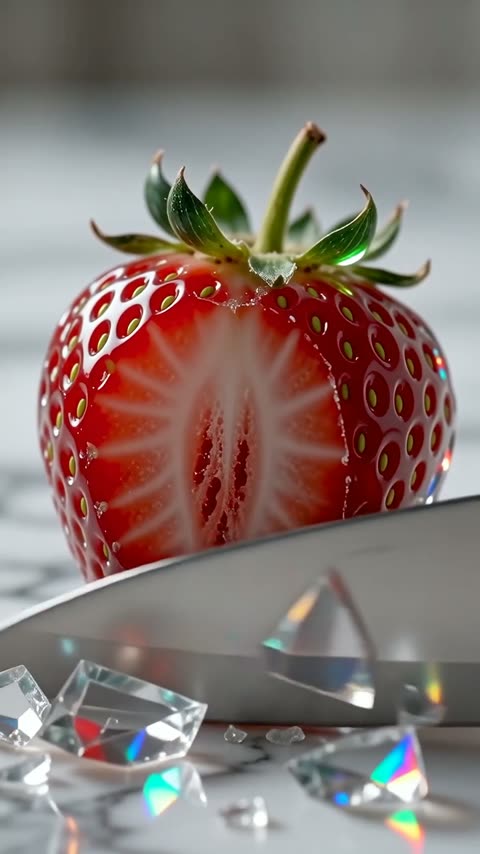
🔮 Glass Fruit Cutting

🍜 Food Summon Jutsu

🐶 Talking Animals

🦶 Cryptid Vlog

🏙️ Giant Encounter
Turn this into a daily-posting engine — see a free sample
Watch a real sample video free. No credit card required.
Watch it free