Guides
Can ChatGPT Make Videos? The Honest 2026 Answer
ChatGPT is a phenomenal scriptwriter and an idea machine — but it renders no video. Here is exactly what it does, where it stops, and how to finish the job.
No — ChatGPT cannot make a video file on its own. It writes scripts, hooks, titles, and ideas, but it produces no voiceover, visuals, captions, or finished MP4. To turn its words into a watchable, captioned vertical video that auto-posts, you bridge the missing stages with a dedicated AI video generator.
It is one of the most-searched questions in AI right now, and the honest answer is the one nobody clickbaits: no, ChatGPT cannot make a video. Not a real one — not a file you can upload to TikTok or YouTube. ChatGPT is a language model. It is astonishing with words: scripts, hooks, titles, captions, and ideas pour out of it. But it renders no voiceover, no imagery, and no captions, and it produces no MP4.
That is not a knock on ChatGPT — it is the single most useful tool in a faceless video workflow, just not the one that finishes the job. This guide is the honest breakdown: what ChatGPT genuinely does, where it stops cold, and how to bridge the gap so a great script actually becomes a finished, captioned vertical video that posts itself. If you understand the seam between "words" and "video," you will never again waste an afternoon expecting a chatbot to hand you a clip.
The short answer: ChatGPT writes, it does not render
A video is several things at once: spoken audio, moving pictures, on-screen text timed to the words, and an encoded file that plays everywhere. ChatGPT produces exactly none of those. What it produces is text — and text is theblueprint for a video, not the video itself. Ask it for a "60-second video about the Roman Empire" and it will gladly write you a tight, well-paced script. Press play on that script and nothing happens, because there is nothing to play.
This is the core confusion behind the question. People see ChatGPT describe shots, scenes, and visual directions in vivid detail and assume the video is in there somewhere. It is not. Describing a lighthouse in a storm is not the same as drawing it, narrating it, or rendering it. If you want the full picture of how a topic becomes a finished clip, the how AI video generators actually work explainer walks the entire pipeline stage by stage.
What ChatGPT genuinely does — and does brilliantly
Do not let the "no" undersell it. The script is the foundation of every faceless video, and a weak script cannot be saved by beautiful visuals. This is precisely where a language model shines. In a real workflow, ChatGPT earns its keep on:
- Scripts — narratable, spoken-word copy tuned to a target length, with a hook in the first line and a strong closing beat.
- Hooks — ten variations of an opening line in seconds, so you can pick the one most likely to stop a scroll.
- Titles and descriptions — platform captions, hashtags, and YouTube titles that match the content.
- Ideas and series planning — a month of topics for a niche, or twenty angles on a single subject.
- Rewrites — tightening, cutting filler, or recasting a paragraph into short sentences a voice model can narrate cleanly.
Used this way, ChatGPT replaces the blank page — the part of content creation most people actually dread. It just hands the result to whatever comes next.
Prompting ChatGPT for video scripts that actually work
Most disappointing "AI scripts" fail because they were prompted like blog posts. Spoken video is a different format, and a few rules transform the output:
- Specify spoken length, not word count. Ask for "a script that runs about 40 seconds when read aloud" (roughly 90–120 words). This keeps clips in the retention sweet spot.
- Demand a hook in the first line. Tell it the opening must create curiosity or tension in under three seconds, with no throat-clearing intro.
- Force short, narratable sentences. Long clauses trip up text-to-speech and sound robotic. Ask for sentences a person could say in one breath.
- Ask for delivery cues in the text itself. Ellipses for pauses, capitalization for stress — voice models take direction from punctuation and formatting, not a separate "emotion" setting.
- Request a closing line that loops or prompts engagement. Short-form rewards a clip that ends on a question or a callback to the hook.
If you would rather not hand-craft prompts every time, a purpose-built AI video script generator bakes these rules — niche tone, hooks, beats, target length — into the scripting step so the output is already shaped for narration.
The wall: four stages ChatGPT can't cross
Here is exactly where the script stops being enough. Turning words into a watchable video requires four more stages, none of which a language model performs:
- Voiceover. A neural text-to-speech model has to read the script aloud in a natural voice. ChatGPT outputs no audio.
- Visuals. A diffusion image model or a text-to-video model has to create a picture for each beat, framed vertically for 9:16. ChatGPT generates no imagery — describing a scene is not drawing it.
- Word-synced captions. A timing step (forced alignment) compares the voiceover to the script and pins each word to its exact timestamp, so captions highlight in step with the narration. ChatGPT can write caption text but cannot time it to audio it never produced.
- Render. An encoder — usually built on FFmpeg — stacks the visuals, voiceover, captions, and music into a single 1080x1920 file. ChatGPT encodes nothing.
And there is a fifth stage beyond even those: publishing. The whole reason to make faceless video is volume, and posting to TikTok, YouTube, or Instagram every day is its own grind. A chatbot cannot touch any of it.
Bridging the gap: from ChatGPT script to finished video
There are two honest ways to cross the wall. The first is the manual route: take your ChatGPT script, paste it into a separate text-to-speech tool for narration, generate or source images for each scene, run a captioning tool, then assemble everything in an editor and export. It works, but it is four or five apps, a lot of copy-pasting, and a fresh round of fiddling for every single video. For one clip, fine. For a daily posting habit, it collapses.
The second route is an end-to-end AI video generator that runs the entire chain for you. You still get a great script — written by the same class of language model behind ChatGPT — but the tool continues past the wall automatically: it narrates with a chosen voice, generates the vertical visuals, times the word-synced captions, renders the finished file, and then posts it. The script is one stage of six, not the whole project. You can see the full flow on the how it works page, or watch real output in the gallery.
The last mile ChatGPT can't reach: auto-posting
Even if you assembled a perfect video from a ChatGPT script, you would still be uploading it by hand every day — and consistency is what short-form algorithms actually reward. This is the stage that separates a one-off demo from a real channel. The most complete platforms connect to your accounts and publish on a schedule you set, so a single configured series produces and ships a fresh video daily — with Kineclip that means YouTube Shorts goes out on its own and TikTok arrives in your inbox needing one tap. If posting is your bottleneck, the guide to auto-posting to TikTok and YouTube covers how that handoff works.
It is worth being clear-eyed about fit. This pipeline excels at faceless, narration-driven niches — facts, history, psychology, motivation, finance explainers, storytelling. Live-action and talking-head formats remain harder for any AI. If you are still deciding what to make, the faceless YouTube ideas that make money breakdown is a good place to start.
So, can ChatGPT make videos? The honest verdict
No — and yes, depending on what you mean. ChatGPT cannot make a video file: no voiceover, no visuals, no captions, no MP4, no post. But it can make the single most important ingredient — a sharp, well-paced script — and it does that better than almost anything else. The right mental model is not "ChatGPT makes videos" but "ChatGPT writes the words; a generator builds the video."
Kineclip is built around exactly that division of labor. It uses a language model for the script — the part ChatGPT does so well — and then carries it the rest of the way: voiceover, visuals, word-synced captions, render, and auto-posting to your channels, all from one series setup. If you have been pasting ChatGPT scripts around between five different apps, the AI video generator closes the gap so a topic becomes a posted video without the manual middle.
Frequently asked questions
Can ChatGPT make videos?
Not on its own. ChatGPT is a language model — it writes scripts, hooks, titles, captions, and ideas, but it does not render a video file. It produces no voiceover audio, no visuals, no on-screen captions, and no finished MP4. To turn its words into a watchable video you still need separate tools for narration, imagery, captioning, and rendering, or an end-to-end AI video generator that bundles all of those.
Can ChatGPT output an MP4 or video file I can upload?
No. ChatGPT returns text. Even when it describes shots, scenes, or visual directions in detail, none of that becomes an actual playable file. The closest it gets is generating a script and a shot list that another system then renders. If a workflow claims ChatGPT 'made the video,' something else — a voice model, an image model, and a render engine — did the heavy lifting after the script.
Is ChatGPT good for writing faceless video scripts?
Yes, this is its strongest role in the workflow. ChatGPT is excellent at hooks, tight pacing, fact lists, story beats, and rewriting a script to a target spoken length. The trick is prompting it for spoken-word structure — a hook in the first line, short narratable sentences, and a strong closing line — rather than blog-style prose. Treat it as your writer, not your editor or renderer.
What does ChatGPT NOT do in a video workflow?
It does not generate voiceover audio, create or animate visuals, time word-synced captions, or encode a final vertical file — and it cannot post to TikTok, YouTube, or Instagram. Those are four or five separate stages, each needing a different kind of model or engine. ChatGPT handles only the first stage: the words.
How do I turn a ChatGPT script into a finished video?
You bridge the gap with the missing stages: a text-to-speech model for narration, an image or video model for visuals, a forced-alignment step for word-synced captions, and a render engine to assemble a 1080x1920 file. You can stitch these together manually with separate tools, or use an end-to-end AI video generator that runs the whole chain — including auto-posting — from a single topic.
Will the new GPT models eventually make full videos?
Video generation is improving fast, but text models and video models are different systems. Even when a single product wraps both, scripting and rendering remain distinct stages under the hood — one writes, the other produces pixels. For now, the reliable 2026 workflow is to use a language model for the script and a dedicated generator for everything after it.
See what a series looks like
How Kineclip helps
Kineclip is the practical implementation of the workflow described above — pick a niche, set a schedule, and the system produces vertical videos end-to-end.
Try Kineclip's series workflow →Related articles
Guides
AI Video Generator Comparison for Daily Shorts
An AI video generator comparison for creators who need more than a clip: compare workflow, control, output, and publishing for daily short-form growth.
Guides
Are Faceless Channels Profitable? The Real Math
Are faceless channels profitable? See the revenue math, the costs, and the publishing system that turns short-form output into a real asset over time.
Guides
Short Form Video Strategy That Runs Every Day
Build a short form video strategy that turns one niche into a repeatable pipeline for ideas, videos, captions, scheduling, and measurable reach at scale.
Make videos like these with AI
40+ viral templates — ASMR, talking characters, POV and more. Pick one and see a real sample in seconds.

✨ Impossible ASMR
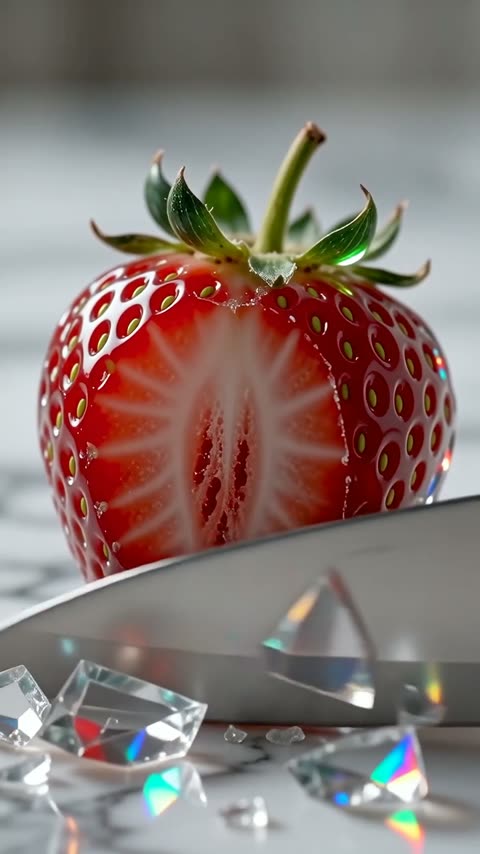
🔮 Glass Fruit Cutting

🍜 Food Summon Jutsu

🐶 Talking Animals
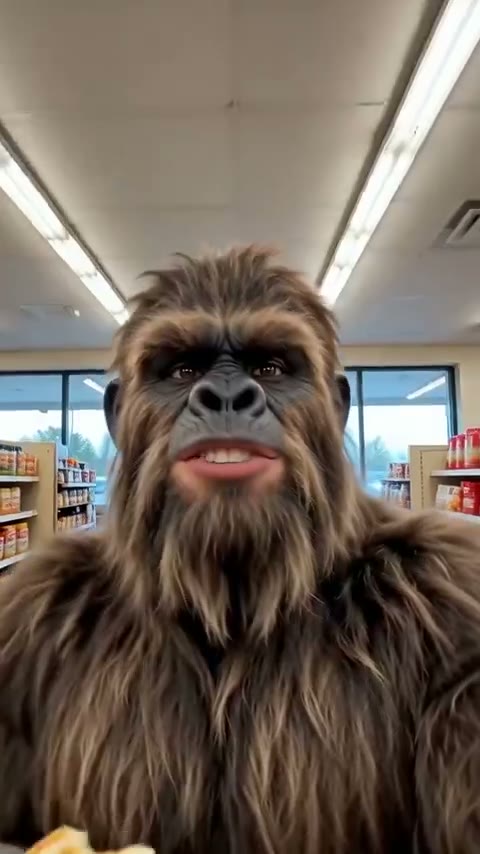
🦶 Cryptid Vlog
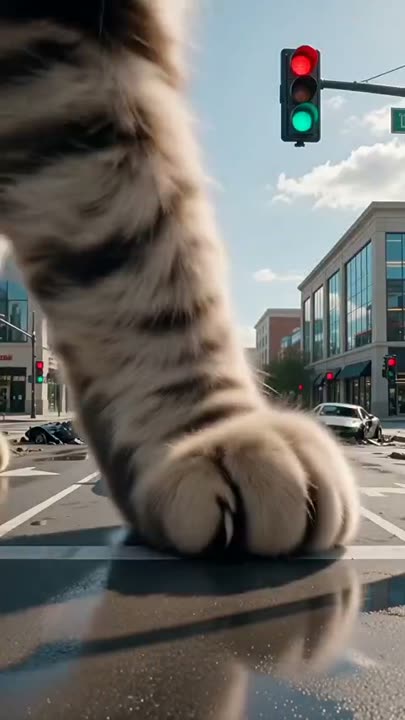
🏙️ Giant Encounter
Do it the easy way — see what the workflow makes, free
Watch a real sample video free. No credit card required.
Watch it free